The FP&Ai Podcast
Join CEO Roger Knocker as he interviews leading industry experts, sharing insights, strategies, and real-world experiences from across the financial world. From financial planning and analysis to leadership trends and digital innovation, Roger dives deep into the topics that matter most to today's finance professionals.
See how AI turns a real business conversation into structured process documentation. Watch FP&Ai's live demonstration using a custom GPT and Smartsheet.
Learn how AI can turn meetings, documents and manual input into structured revenue planning process documentation, creating a stronger foundation for model design and implementation.
Discover how finance teams can automate routine work, reduce manual effort and use AI to create more time for analysis and better decision making.
Learn how AI, process mapping, and workflow optimisation help finance teams eliminate bottlenecks, reduce duplication, and improve business performance.
In this episode of the FP&Ai Podcast, Roger Knocker is joined by Anthony Wilson and Donovan Moses to explore the third vital component of the Finance Operating System: Accelerating Analysis. Now that we have addressed removing friction and automating workflows, we focus on how to transform that efficiency into high-speed, actionable intelligence for the boardroom. The discussion centres on the "Last Mile" of finance, moving from just producing reports to delivering real-time strategic insights. We unpack how a robust systems architecture allows finance teams to pivot instantly from historical reporting to forward-looking scenario planning. By shifting the workload away from data collection, leaders can spend more time on the "Why" behind the numbers. The key takeaway: Acceleration in finance isn't about working faster; it's about building a system that delivers insights at the speed of business. [0:00 - 1:30] Introduction to Standardized Workflows: The team defines the importance of standardized workflows in finance, emphasizing the need for repeatable, tracked, and timely processes that ensure the right tasks are performed by the right people. [1:30 - 4:21] Benefits of Workflow Automation: The discussion covers how workflows improve management visibility, accountability, and the ability to monitor progress, using a procurement process as a practical example to illustrate routing and authority limits. [4:21 - 7:28] Workflows Outside of the ERP: The guests explain how teams can leverage tools like HubSpot, Google Docs, Zapier, and Smartsheet to automate non-ERP processes, such as commercial inquiries and low-risk, recurring journal entries. [7:28 - 9:10] Implementing Daily Checks: The team highlights the necessity of implementing daily quality checks for automated workflows to detect and resolve failures, ensuring that critical data remains accurate. [9:10 - 12:09] Using Forms for Validation: A key tip is shared regarding the use of data entry forms to enforce structure, validation, and quality at the source, preventing errors in shared spreadsheets. [12:09 - 14:15] Documenting for Success: The conversation concludes by stressing the importance of documenting processes before automating them, focusing on routine, low-risk tasks to maintain human oversight where necessary while building a more robust finance system.
In this episode of the FP&Ai Podcast, Roger Knocker is joined by Anthony Wilson and Donovan Moses to explore the next evolution of the Finance Operating System: the shift from manual intervention to high-level automation and systemisation. Building on our previous discussions, we unpack why simply "working harder" is no longer a viable strategy for modern finance teams. The conversation centres on how to build resilient systems that run independently of individual effort, allowing finance professionals to move away from mundane data entry and toward high-impact strategic analysis. We discuss the practical steps to audit your current workflows, identify automation opportunities, and implement a "system-first" culture that eliminates human error and drives enterprise value. The key takeaway: To scale a business, you must first automate the friction out of your finance function. [0:00 - 1:22] Introduction and Reconciliation Quality: The team introduces the importance of reconciliation as a core finance process to ensure accurate, timely month-end closures. [1:22 - 3:51] Why Reconciliations are Necessary: They explain that reconciliations are vital for verifying the factual accuracy of invoices, pricing, and quantities, and for resolving timing discrepancies caused by cutoff dates. [3:51 - 6:53] Managing Third-Party Documentation: The speakers discuss managing rules for third-party documentation, including setting thresholds for approvals and using ERP systems to maintain process integrity during month-end. [6:53 - 8:33] Impact on Planning and Forecasting: Anthony Wilson highlights how accurate reconciliation is critical for reliable cash flow forecasting, noting that errors can lead to poor strategic decision-making. [8:33 - 11:50] Moving Beyond the "Finance Burden": Donovan Moses illustrates how teams are often "burdened" by disparate systems and manual work, proposing a transition to a digitized environment that acts as a bridge to a single version of the truth. [11:50 - 15:57] System Maturity and Standardization: The panel discusses building maturity one step at a time, suggesting that even if a team is still using Excel, they should implement standardized templates and rigorous monitoring to maintain audit trails and efficiency. [15:57 - 17:14] Summary: They conclude by emphasizing that strong master data governance and enforced reconciliation discipline are two essential pillars for building a sustainable and high-quality finance function.
This podcast episode features host Roger Knocker in conversation with Yaseen Enos, a Chartered Accountant, focusing on the strategic implementation and role of Enterprise Performance Management (EPM) within modern finance departments. [0:33-2:21] Project-Based Workflows: Yaseen Enos explains that his daily professional life is primarily project-driven. Rather than focusing on maintenance, he aims to automate processes and systems, prioritizing high-value, innovative problem-solving that aligns with broader business goals identified by the CFO and senior leadership. [2:21-4:50] Practical Automation: The pair discusses a real-world example involving the automation of transaction data posting into the general ledger. By removing manual intervention, the goal is to improve accuracy and ensure that financial records remain perfectly synced with source systems. [6:47-11:20] Understanding Business Needs: Enos emphasizes the importance of spending time upfront to identify the 'true' underlying problem rather than simply executing a requested solution. He notes that users often suggest a specific tool as a solution, but deeper analysis is required to ensure the project actually addresses the correct business challenge. [12:01-13:16] The Mandate to Push Back: Enos highlights that he is empowered by an executive mandate to push back on projects that do not provide significant value or fail to meet the actual business needs, allowing him to better manage his team's workload. [14:06-16:41] The Case for EPM Tools: The discussion shifts to why companies eventually move away from spreadsheets like Excel and PowerBI. Enos suggests using a 'financial maturity model' to assess when a business has outgrown manual reporting; if a company struggles to deliver timely, accurate forecasts despite adding more staff, it is time to transition to an EPM solution. [19:16-21:38] Efficiency and Future-Proofing: They conclude that while Excel is a powerful tool, it becomes a bottleneck as business complexity and data volume grow. Implementing an EPM system is framed as an essential step for businesses looking to move beyond simple reporting toward agile, data-driven decision-making.
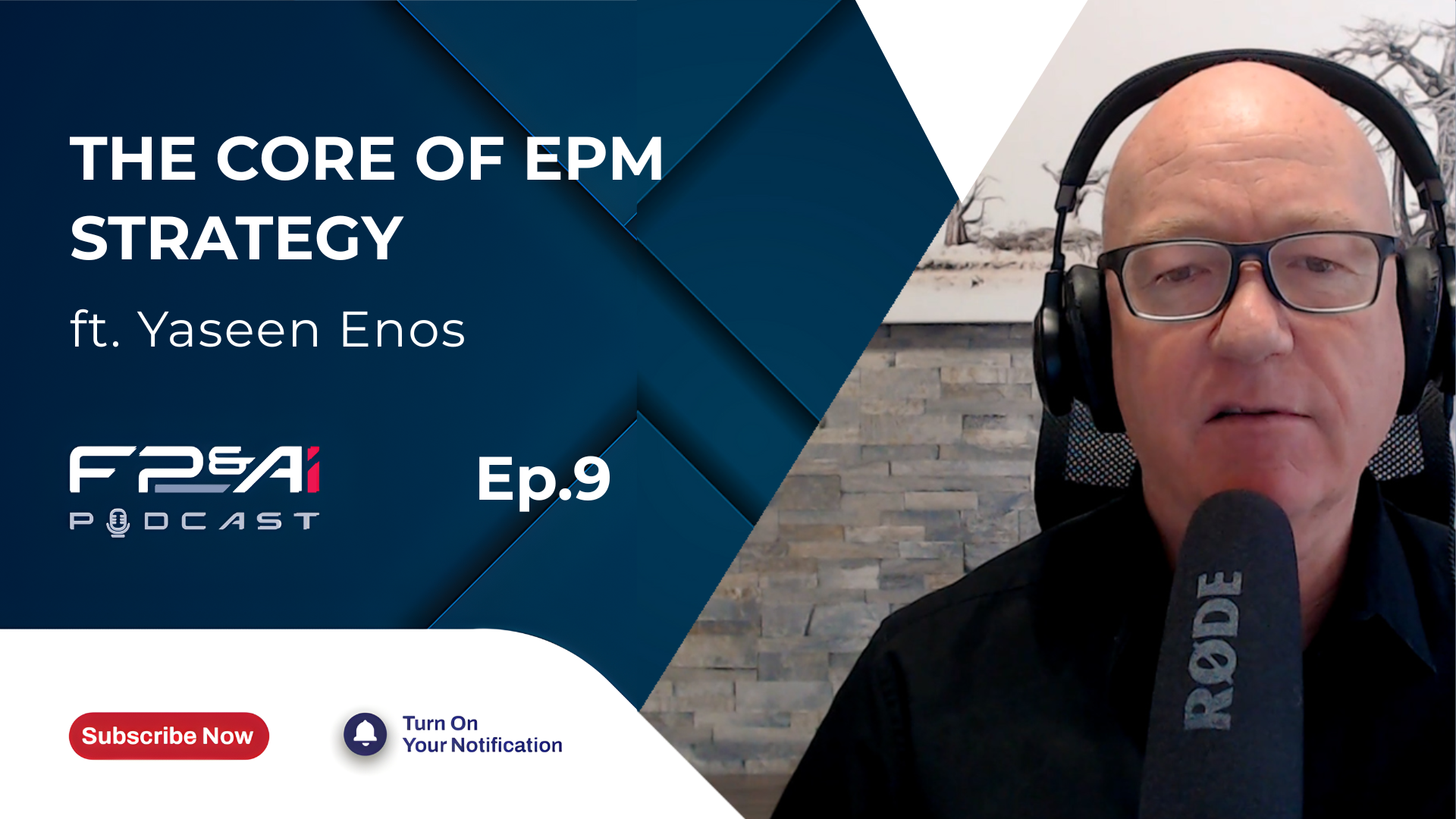
This podcast episode features host Roger Knocker in conversation with Yaseen Enos, a Chartered Accountant, focusing on the strategic implementation and role of Enterprise Performance Management (EPM) within modern finance departments. [0:33-2:21] Project-Based Workflows: Yaseen Enos explains that his daily professional life is primarily project-driven. Rather than focusing on maintenance, he aims to automate processes and systems, prioritizing high-value, innovative problem-solving that aligns with broader business goals identified by the CFO and senior leadership. [2:21-4:50] Practical Automation: The pair discusses a real-world example involving the automation of transaction data posting into the general ledger. By removing manual intervention, the goal is to improve accuracy and ensure that financial records remain perfectly synced with source systems. [6:47-11:20] Understanding Business Needs: Enos emphasizes the importance of spending time upfront to identify the 'true' underlying problem rather than simply executing a requested solution. He notes that users often suggest a specific tool as a solution, but deeper analysis is required to ensure the project actually addresses the correct business challenge. [12:01-13:16] The Mandate to Push Back: Enos highlights that he is empowered by an executive mandate to push back on projects that do not provide significant value or fail to meet the actual business needs, allowing him to better manage his team's workload. [14:06-16:41] The Case for EPM Tools: The discussion shifts to why companies eventually move away from spreadsheets like Excel and PowerBI. Enos suggests using a 'financial maturity model' to assess when a business has outgrown manual reporting; if a company struggles to deliver timely, accurate forecasts despite adding more staff, it is time to transition to an EPM solution. [19:16-21:38] Efficiency and Future-Proofing: They conclude that while Excel is a powerful tool, it becomes a bottleneck as business complexity and data volume grow. Implementing an EPM system is framed as an essential step for businesses looking to move beyond simple reporting toward agile, data-driven decision-making.
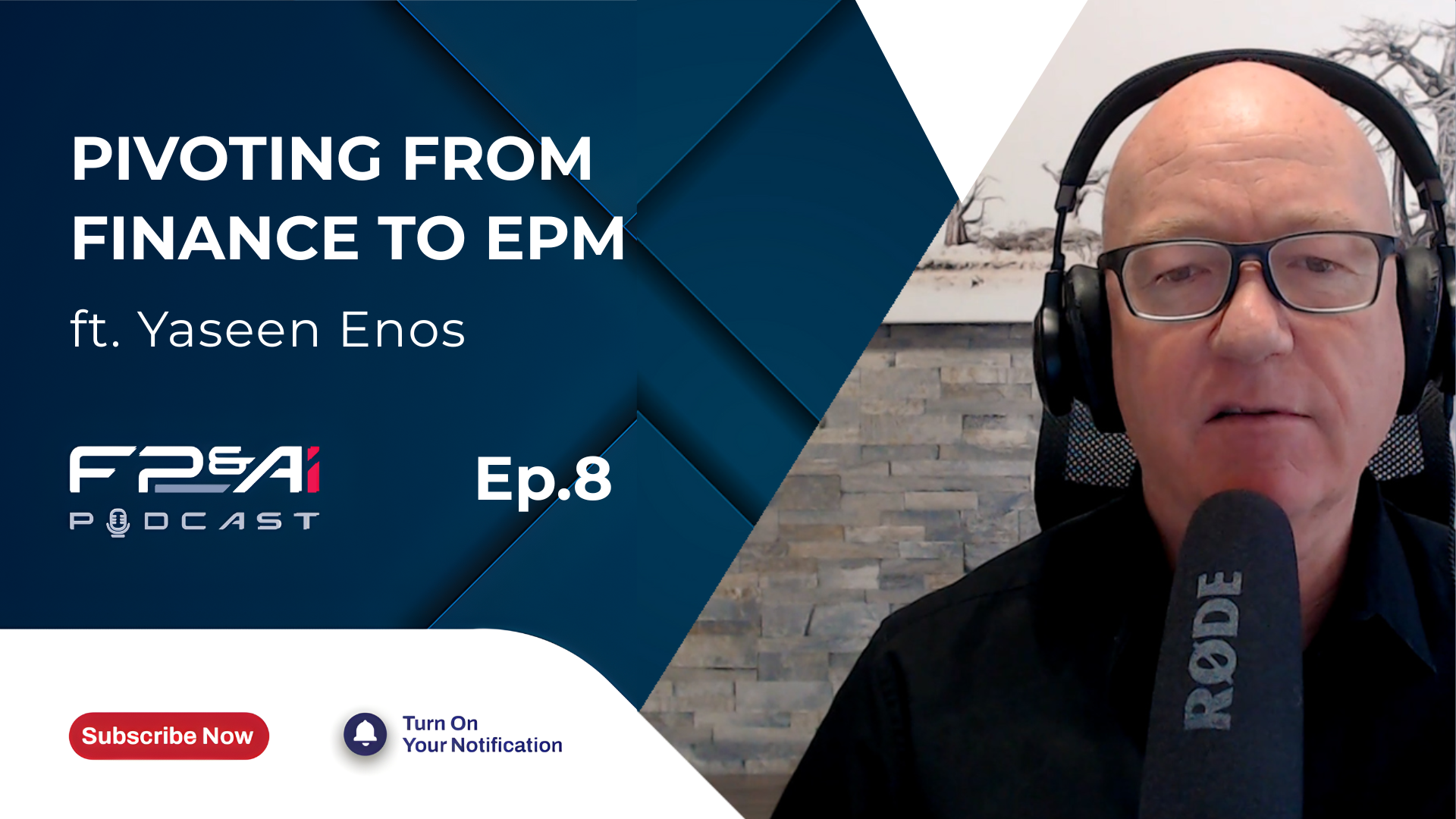
In this episode of the FP&Ai podcast, host Roger Knocker interviews Yaseen Enos, a Chartered Accountant (CA) who transitioned from a traditional finance path into a specialized role in Enterprise Performance Management (EPM) and financial process automation. [0:00 - 3:07] Introduction and Background: Yaseen introduces himself and his current work at Flash, a fintech company under the Pepkor group that supports small traders with digital services like airtime, electricity, and payment processing. [3:07 - 9:08] The Role of an FP&A Automation Specialist: Yaseen explains his shift away from traditional accounting tasks (like auditing or financial statement preparation) toward building systems for financial analytics, reporting, and automated budgeting. He emphasizes his collaboration with diverse stakeholders, including HR and sales, to integrate various business plans into a single financial framework. [9:08 - 15:46] The Career Pivot: Yaseen reflects on his time as a finance analyst, where he struggled with manual spreadsheet-heavy tasks. He describes his decision to move into a systems-focused role as a risk, noting that he initially saw it as a temporary detour from the traditional path toward becoming a CFO. [15:46 - 21:54] Evolution of Tools: The conversation covers the progression from manual Excel modeling to implementing enterprise tools like Hyperion. Yaseen discusses the importance of data integrity and creating a "single version of the truth" through system reconciliations. [21:54 - 27:03] BI vs. EPM: The two clarify the distinction between Business Intelligence (BI) tools—which are primarily used for visualizing historical data—and EPM tools, which focus on managing business performance, modeling future scenarios, and integrating drivers across departments to enable faster decision-making.
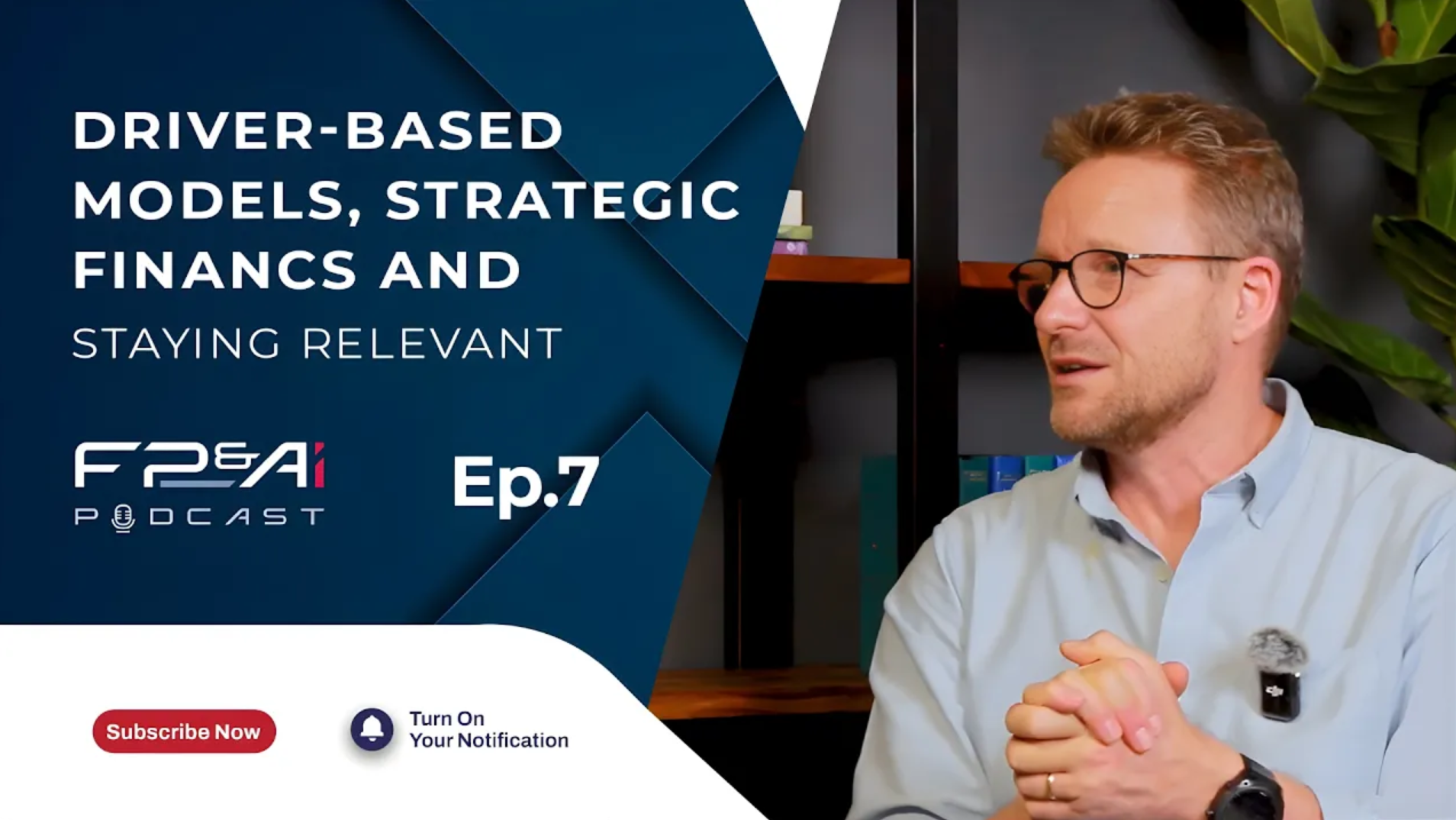
In this episode of the FP&Ai Podcast, Roger Knocker and leadership coach Andrew Brown explore how AI is transforming the future of finance. They discuss generational shifts in work styles, the rapid adoption of AI among younger professionals, and how technology is changing the way finance teams communicate and operate. [ 02:12 - 04:37 ] Generational Work Styles: The speakers discuss the shift toward asynchronous communication, particularly among younger professionals who prefer flexibility over traditional, live, synchronous meetings. [04:37-05:28] The Evolving Finance Function: Knocker and Brown explore how younger, technically enabled professionals are moving away from the traditional role of "fancy bookkeepers" toward becoming strategic business enablers. [ 06:58 - 08:46 ] AI in Finance: There is a consensus that while AI will automate much of the backward-looking, historical reporting tasks that currently consume a significant portion of a finance professional's time, it creates an opportunity for them to focus on innovation and growth. 06:24 - 06:58 ] The Importance of Mindset: The discussion emphasizes that the essential skill of the future is knowing how to instruct, coach, and verify AI tools rather than fearing them. [ 13:01 - 14:50 ] Practical AI Application: Knocker shares a personal anecdote about using AI to draft 16 hours' worth of learning outcomes in just 60 minutes, illustrating the massive productivity gains available to those who actively embrace these technologies. [ 17:13 - 17:47 ] Staying Relevant: Brown highlights that a growth mindset—characterized by curiosity and active experimentation—is vital for finance professionals to remain relevant. [ 20:57 - 21:28 ] The conversation concludes with the message that while AI will not replace finance professionals, those who leverage these tools effectively will likely replace those who do not.
For more insight, subscribe to our podcast.
At FP&Ai, we believe finance is more than numbers , it’s about insight.